
Supply Chain Intelligence
Pharmaceutical Supply Chain Trends for 2026: What We Heard at LogiPharma USA 2026
By Transvoyant Team
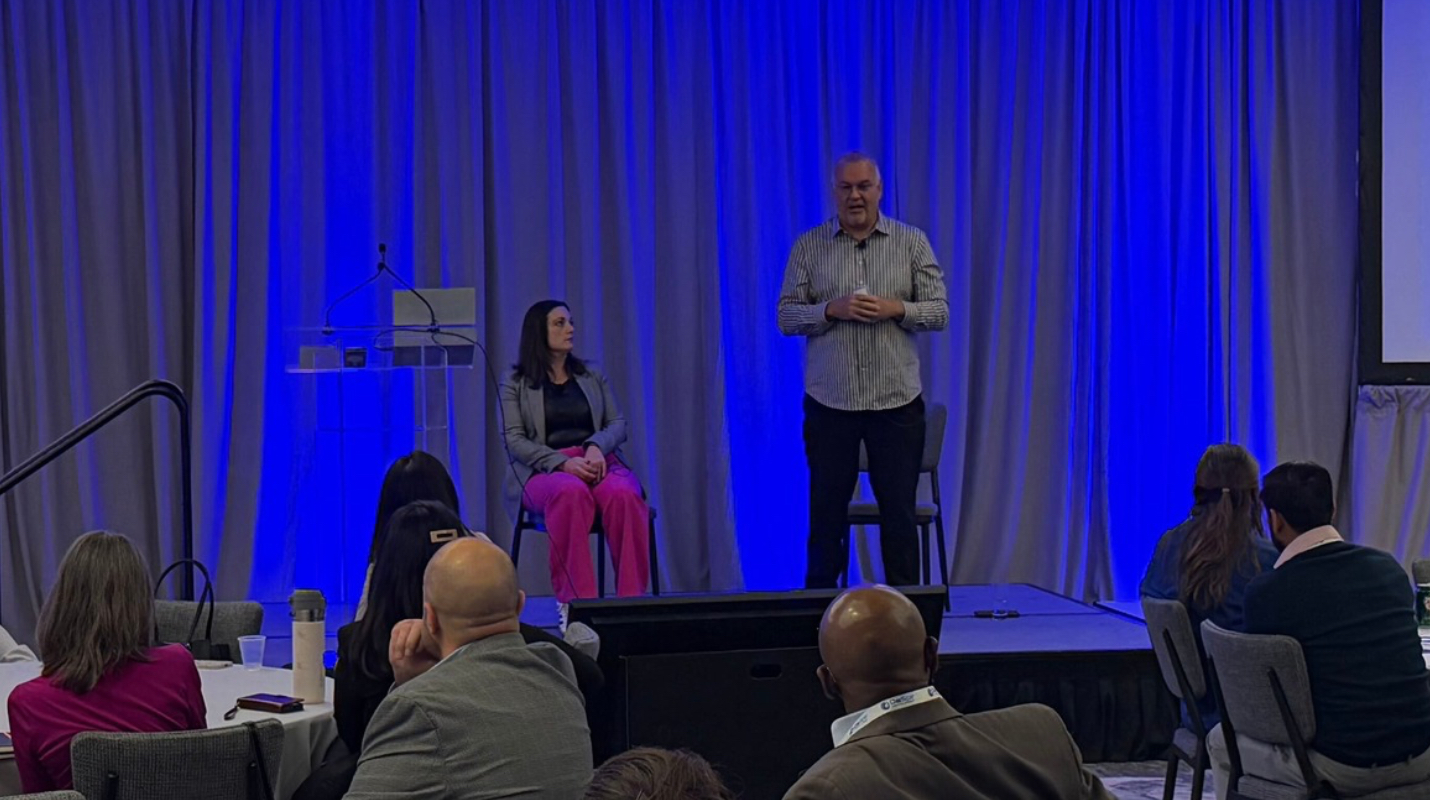
LogiPharma USA 2026 brought pharmaceutical, biotech, logistics, distribution, and technology leaders together in Boston as the industry manages increasingly complex networks and therapies. Across three days of conversations, one theme stood out: the life sciences supply chain is shifting from reactive response to proactive decision-making. Resilience now means seeing risk earlier, understanding its impact, and acting before a disruption becomes a service failure, a compliance issue, or a lost product.
Here are the top trends shaping pharmaceutical supply chains and cold chain logistics in 2026.
Trend 1: Supply chain visibility is no longer enough
The industry has spent years investing in track-and-trace, control towers, dashboards, sensors, and data platforms, and supply chain teams can see more than ever. But seeing more does not mean knowing what to do. A shipment can be visible and still at risk. A temperature can be monitored while the payload approaches a point of no return. An ETA can be updated while the downstream impact of a delay remains unknown. And an alert can sit on a dashboard with no context about what should happen next.
For temperature-sensitive medicines, biologics, vaccines, and advanced therapies, documenting a failure is not the goal. Preventing it is. That is why pharmaceutical supply chain visibility is evolving into pharmaceutical supply chain intelligence.
Trend 2: AI in the pharmaceutical supply chain is moving from experimentation to execution
The AI conversation at LogiPharma has matured. The question is no longer “Can we use AI in supply chain?” but where AI creates operational value, whether the underlying data is reliable enough to support it, how organizations should govern AI, and how a successful pilot scales across the enterprise.
The answer starts with data. AI cannot compensate for a fragmented or unreliable data foundation, and in a pharmaceutical supply chain, the quality of an answer depends on the quality and context of the information behind it. This is why TransVoyant continuously ingests, cleanses, normalizes, and contextualizes supply chain data before turning it into predictive intelligence. The goal is a more accurate representation of what matters in what is happening across the physical network, not another layer of data.
Trend 3: Cold chain management is becoming predictive, not just monitored
A conventional supply chain can sometimes absorb a delay. A temperature-sensitive pharmaceutical shipment often cannot. By the time a traditional monitoring system reports that a shipment has crossed its temperature threshold, the chance to save the product may already be gone.
This is why TransVoyant views cold chain as a predictive problem rather than a monitoring problem.
Sensors still matter because they provide ground-truth data on shipment condition, but they do not determine what happens next. The real opportunity comes from combining sensor telemetry with shipment information, carrier behavior, transportation conditions, weather, geopolitical events, route behavior, and facility constraints.
That context makes it possible to identify an emerging problem before it becomes a temperature excursion.
Trend 4: Cold chain risk lives between the milestones
Risk doesn’t always appear where you’d expect it to. A shipment can leave a manufacturing facility in perfect condition and stay within range for most of its journey, then fail during a handoff. A truck arrives at a facility and sits. A trailer door stays open. A shipment misses a connection, a port becomes congested, a weather event changes transit time, or a carrier deviates from expected behavior. Individually these events may look manageable, but together they can change the outcome for the payload.
Cold chain risk is not isolated to a temperature reading. It is a function of time, location, movement, environmental conditions, handoffs, and the payload’s remaining tolerance. Managing it requires understanding the physical behavior of the entire network.
Trend 5: From alerts to automated intervention
Traditional monitoring asks, “Has something gone wrong?” Predictive intelligence asks, “What is likely to go wrong, when, and what can we do about it now?” The next step is whether the network can execute the predictive intelligence’s intervention before failure occurs.
TransVoyant calls this Autonomic Interdiction. Instead of waiting for a threshold to be crossed and then asking a planner to work out what happened, the system continuously evaluates the network, identifies emerging constraints, calculates downstream consequences, and supports or executes the appropriate intervention. In a cold chain environment, that could mean spotting a shipment trending toward a thermal excursion and intervening while there is still time to protect the payload. It’s the difference between documenting failure and preventing it.
Trend 6: Data quality and context matter more than dashboards
The modern cold chain generates enormous volumes of data: shipment status, temperature, location, carrier events, orders, transit times, weather, port conditions, facility activity, geopolitical risk, customs, capacity, and inventory.
The challenge now is connecting those signals, determining which ones matter to a particular shipment or network, and translating them into an operational decision.
A living supply chain model, one that reflects the network as it actually behaves, is more valuable than another static view.
Trend 7: Collaboration across the ecosystem remains essential
Technology was a major part of the LogiPharma conversation, but reliability still depends on collaboration among manufacturers, distributors, logistics providers, carriers, technology teams, and quality organizations.
Better technology helps these groups work from the same operational reality, surface risks earlier, share information across organizational boundaries, and understand what a disruption means beyond the immediate shipment. The goal is not to replace the people running the supply chain but to give them better information, earlier, with enough context to act.
What’s next for life sciences supply chains?
LogiPharma USA 2026 made it clear that digital supply chain transformation in life sciences is entering a new phase. The first phase was visibility, the next is intelligence, and the one after that is action. Knowing where a shipment is matters, and so does knowing its temperature, but knowing that a disruption is developing matters even more. The ultimate measure is whether the network can act early enough to keep a disruption from becoming a loss.
That is the standard pharmaceutical supply chains are moving toward: better decisions, made earlier, with the ability to act before failure. This is where the cold chain is headed, and where we believe supply chain intelligence needs to go next.
About the Author
By Transvoyant Team